With energy costs remaining a major operational and household expense across the UK, solar systems have transitioned from an environmental choice to a core financial strategy. Generating your own clean electricity protects your budget against volatile grid pricing while turning unused roof or ground space into a revenue generating asset.
Whether you are looking to lower household bills, reduce commercial overheads, or diversify agricultural income, solar energy offers tailored financial advantages for every sector.
Solar for Your House: Slashing Household Energy Bills
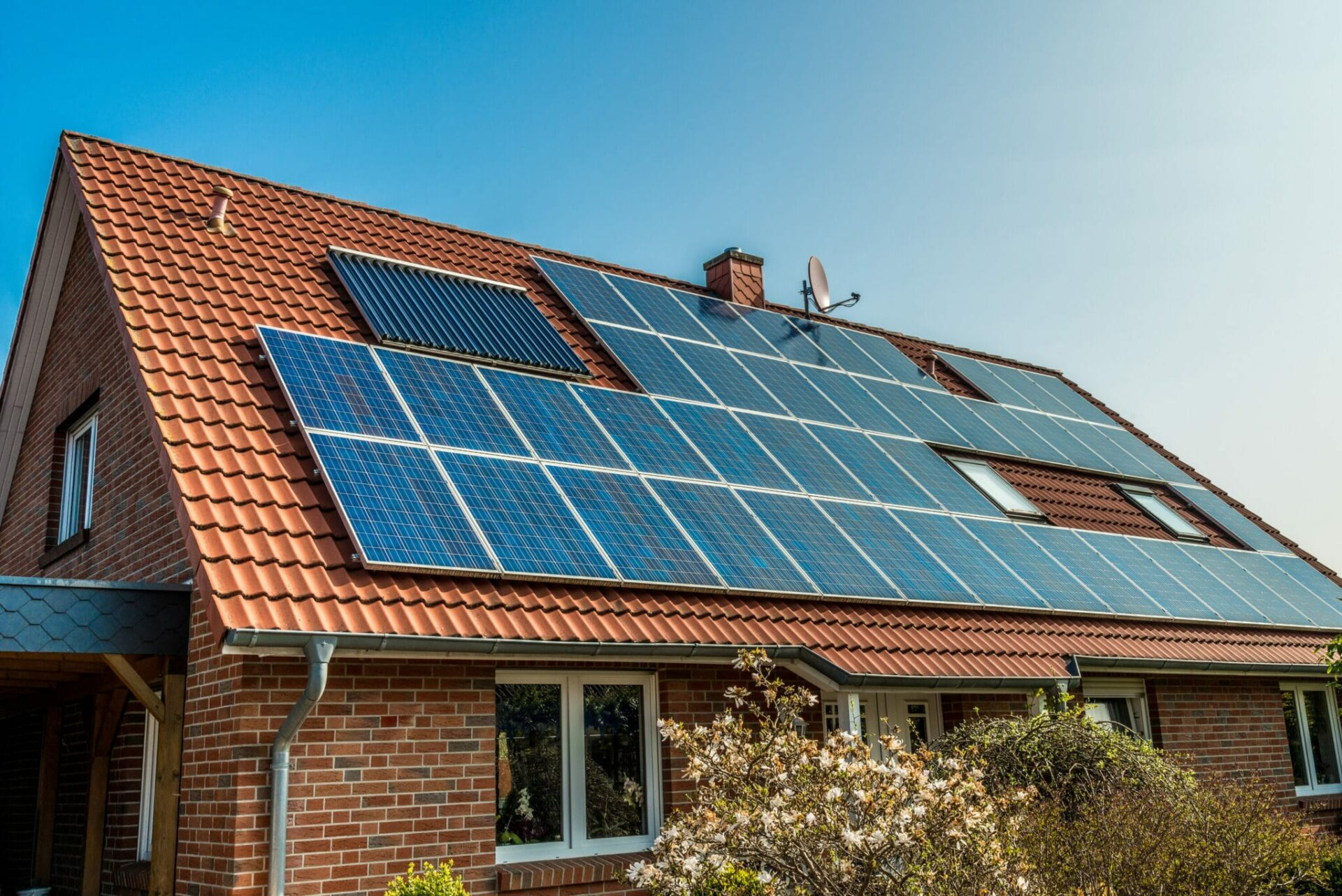
For homeowners across the UK, installing a domestic solar panel system can provide an immediate relief from high energy costs. The average UK household uses roughly 2,700 kilowatt hours of electricity annually, and a standard 4-kilowatt solar installation can generate enough power to offset a vast proportion of that demand. According to industry statistics, households that align their daily energy use with peak solar generation hours can save up to £690 per year on their electricity bills.
The direct savings are further enhanced by government incentives designed to reduce upfront costs. Domestic solar panel installations currently benefit from a 0% Value Added Tax (VAT) rate in the UK,saving homeowners roughly £1,000 to £1,500 on installation costs compared to standard tax rates. Furthermore, under the Smart Export Guarantee (SEG), energy suppliers pay households for any excess electricity exported back to the National Grid, with export tariffs paying between 12p and 25p per kilowatt hour.
These combined savings result in an impressive return on investment. The average domestic solar PV system yields a simple payback period of between 6 and 9 years, while the panels themselves carry performance warranties lasting 25 years or more. Over the total lifespan of the system, homeowners can expect a return on investment of over 300%, alongside an average increase of 4% in property value according to property market estimates.
Solar for Your Farm: Harnessing Land and Roof Space for Agricultural ROI
Agriculture is one of the most energy intensive industries in the UK, with dairy, poultry, and horticulture businesses incurring significant daytime electricity costs for milking systems, grain drying, and cold storage. Government agricultural statistics show that 27% of UK farm businesses now generate solar power, making it the most popular form of renewable energy on British farms.
The financial arguments for agricultural solar are particularly compelling due to rapid payback timelines. With current commercial electricity tariffs, a typical farm solar array achieves simple payback in just 2 to 4 years. Grants such as the Farming Equipment and Technology Fund can cover up to 40% of capital costs for eligible agricultural technology, significantly lowering initial outlay. Combined with the 100% Annual Investment Allowance, which allows farm businesses to deduct the full cost of eligible plant and machinery from their taxable profits in the first year, the net out of pocket cost drops substantially.
Farms also possess the unique advantage of scale. Large barn roofs and under utilised land allow for commercial systems ranging from 50 kilowatts to over 500 kilowatts. A 100-kilowatt system on a poultry or dairy farm can generate roughly 88,000 kilowatt hours of electricity per year, saving the business upwards of £21,000 annually in avoided grid purchases while unlocking substantial secondary income from exporting surplus energy during peak production months.
Solar for Your Business: Lowering Overhead Costs and Boosting Profit Margins
For commercial properties, office buildings, and manufacturing facilities, energy represents a persistent line item that directly impacts profit margins. Commercial solar installations allow companies to lock in low electricity costs for decades, effectively hedging against market volatility and operational risk.
From a tax perspective, commercial solar installations offer immediate financial advantages. Under the UK Government's full expensing and Annual Investment Allowance schemes, businesses can write off 100% of the cost of qualifying solar hardware against their corporate tax liability in the year of purchase. This tax relief can effectively reduce the total project cost by up to 25%, depending on the business structure and tax band.
Because most commercial operations consume most of their energy during daylight hours, self-consumption rates for businesses are exceptionally high, often exceeding 80%. A medium sized commercial array of 50 kilowatts can cut grid dependence dramatically, delivering annual bill savings of £10,000 or more. Beyond direct savings, commercial solar improves Environmental, Social, and Governance ratings, helping businesses win tender contracts where carbon reporting and sustainability credentials are strict prerequisites.
Long Term Financial Resilience AcrossEvery Sector
Whether applied to a family home, a working farm, or a commercial enterprise, solar PV technology provides a reliable shield against future energy price spikes. With minimal moving parts, low ongoing maintenance fees, and long manufacturer guarantees, solar panel installations represent one of the safest and most predictable capital investments available in the UK today.
If you would like to discuss your solar options with one of our experts and a free quote for your home, business or farm please contact us.